
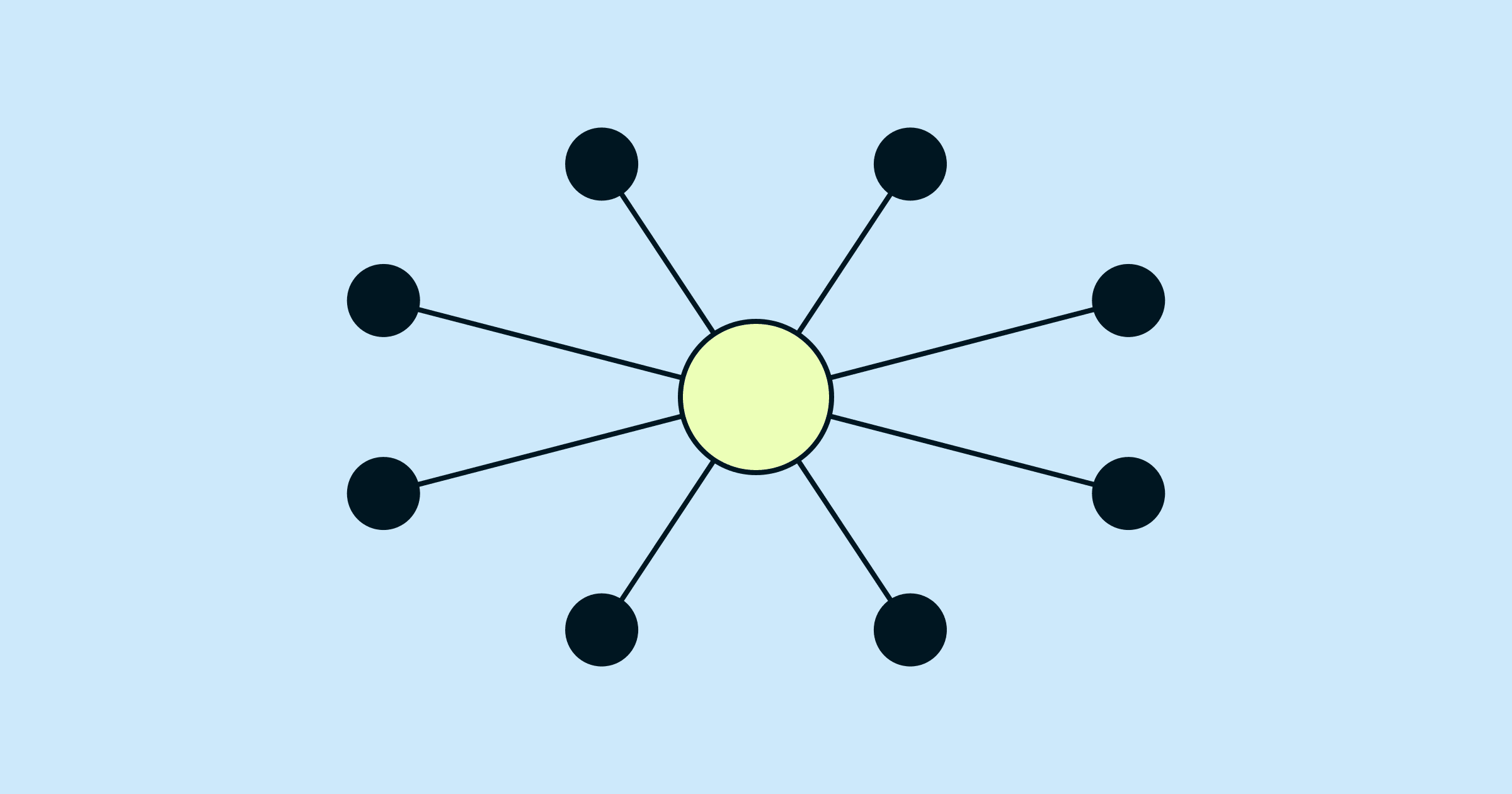
In May 2026, Anthropic joined Blackstone, Hellman & Friedman, Goldman Sachs and several other investment groups to establish a new enterprise AI services company.
The firm will have Anthropic resources embedded directly within it. Its initial route to market will include the investors’ networks of hundreds of portfolio companies, where it will design, build and maintain AI deployments. Blackstone announcement
The arrangement is significant for reasons that extend beyond Anthropic or private equity.
An AI company would traditionally develop a product and then search for customers. This company begins with access to customers, knowledge of their commercial priorities and investors capable of influencing how they allocate capital.
It is not simply another implementation partnership.
It is a new distribution structure.
Private equity does not merely possess a list of potential buyers. It has governance rights, operating relationships, investment horizons and a direct financial interest in improving the businesses it owns.
That combination could make ownership networks one of the most effective ways to move AI from a general capability into specific industries.
The cap table is becoming a route to market
Software distribution has historically depended on reaching individual companies.
Vendors build sales teams, form channel partnerships and attempt to persuade each customer that their product deserves budget and organizational attention. Even after a sale, the customer remains responsible for connecting the technology to its operations and creating value from it.
Private equity changes several parts of that equation.
A large investment firm can influence dozens or hundreds of companies at once. It can identify recurring problems across the portfolio, negotiate technology agreements centrally and direct operating resources toward implementation.
It can also create urgency.
A software vendor may have access to a department. An owner can discuss the company’s priorities with its board, management team and operating partners. It can connect an AI initiative to an established value-creation plan and fund the organizational changes needed to support it.
This does not guarantee successful adoption. It does alter the conditions under which adoption occurs.
A portfolio company no longer encounters AI as another unsolicited product pitch. The initiative may arrive with a financial sponsor, an approved implementation partner, dedicated capital and a clear expectation that its commercial effect will be measured.
The cap table becomes part of the go-to-market system.
Private equity needs value creation it can operate
The timing is not accidental.
For much of the previous private-equity cycle, leverage and rising valuation multiples contributed heavily to investment returns. Higher borrowing costs and more static multiples have made that model less dependable.
Bain estimates that an illustrative buyout which once needed approximately 5% annual EBITDA growth to generate a target return may now require closer to 10–12%. The industry is also carrying approximately $3.8 trillion in unrealized value, while average holding periods have moved toward seven years. Bain Global Private Equity Report 2026
Private-equity firms therefore need more of their returns to come from improving the underlying business.
AI appears at an unusually convenient moment.
It can potentially influence costs, sales performance, pricing, product development and customer service. More importantly, these improvements can be connected to the operating metrics and financial statements through which an investor already evaluates a company.
Bain’s 2026 midyear report describes AI as one of the most important value-creation opportunities across private-equity portfolios. It also notes that active portfolio-company counts have roughly doubled over the past decade, increasing the number of businesses that operating teams are expected to support. Bain Private Equity Midyear Report 2026
This creates both the incentive and the scaling problem.
Every portfolio company can identify potential AI projects. Few investment firms can provide each one with an experienced team capable of evaluating the opportunity, redesigning the process and carrying the project into operation.
The new Anthropic-backed company is designed to address that shortage directly.
Implementation capacity is becoming a scarce asset
Enterprise demand for AI may be high, but demand for a model is not the same as demand for a functioning system.
The greater bottleneck is increasingly the supply of people capable of translating model capability into an operating change.
This helps explain why a frontier-model company would participate in building a services organization rather than leaving implementation entirely to customers and conventional systems integrators.
The new firm will place engineers close to portfolio companies while maintaining a connection to Anthropic’s product and research teams. The stated objective is not merely to install Claude. It is to build systems that can continue changing as the underlying models improve.
That creates a different relationship between technology provider, implementation partner and customer.
The model company gains an organized route into established businesses. Investors gain specialist delivery capacity. Portfolio companies receive access to engineers and patterns they might struggle to develop independently.
The implementation company sits in the middle, learning what each side needs.
A similar signal can be found in Silversmith Capital’s investment of more than $100 million in Vantora, formerly UP.Labs. Vantora works with companies including Porsche, Alaska Airlines and J.B. Hunt to build AI-native ventures around operational problems in automotive, aviation, logistics and manufacturing. Wall Street Journal
Vantora reports that it has launched 17 companies and targets an average EBITDA impact of $50 million. Its proposition is based on a simple observation: some important enterprise problems cannot be solved by purchasing an existing product because the required product does not yet exist. Vantora
These models differ in structure, but they point toward the same market development.
Capital is moving toward organizations that can repeatedly build inside other organizations.
A portfolio can become a learning system
The most powerful advantage may not be the initial access to companies.
It may be the ability to learn across them.
Consider a private-equity portfolio containing businesses in logistics, manufacturing, insurance and professional services. Their products differ, but many of their operating problems share a structure.
They process documents. They qualify requests. They reconcile information across systems. They schedule work, manage exceptions, answer recurring questions and convert unstructured communication into decisions.
An implementation completed in one business cannot simply be copied into another. The data, customers, regulations and operational consequences will be different.
But much of the knowledge surrounding the implementation can travel.
The investor and its delivery partners can reuse:
- Methods for identifying commercially meaningful opportunities.
- Reference architectures and approved technology components.
- Security, permission and evaluation standards.
- Procurement terms and vendor assessments.
- Approaches to adoption and accountability.
- Definitions for measuring financial impact.
- Lessons about where implementation commonly fails.
This is where portfolio scale begins to compound.
The first deployment creates a result. It also creates a playbook. The second deployment tests which parts of that playbook are reusable. Over time, the owner develops a body of implementation knowledge that no single portfolio company could justify creating alone.
The portfolio becomes more than a collection of assets.
It becomes a learning network.
Distribution now includes authority
Traditional distribution is usually understood as access to buyers.
Ownership-based distribution adds another element: the ability to reorganize the environment in which the product will be used.
A reseller can introduce software. A financial sponsor may be able to fund the integration, recruit leadership, set performance expectations and incorporate the project into board-level reporting.
That authority matters because many AI opportunities cross departmental boundaries.
An initiative may require cooperation between technology, operations, finance, compliance and customer-facing teams. Each department may support the concept while resisting the budget, risk or process changes required to make it work.
An investor can sometimes resolve these conflicts more directly than an external vendor.
It can also connect the project to a defined economic claim.
If an AI system is expected to improve pricing, reduce processing costs or increase conversion, the baseline can be established at the beginning of the holding period. Management incentives and operating reviews can then reflect whether that improvement occurred.
This gives private equity a potential advantage over companies where AI adoption is distributed across disconnected departmental experiments.
The investor can treat adoption as a portfolio operating programme rather than a collection of software purchases.
Standardization has a boundary
The same structure that makes this model powerful also makes it dangerous.
Portfolio-wide initiatives create pressure to treat companies as more similar than they are.
A system that improves claims processing at one insurer may not transfer cleanly to another. Two manufacturers may use comparable terminology while operating with different tolerances, data quality and consequences of error.
Even apparently generic functions such as customer support, sales qualification and finance contain company-specific knowledge.
If the investor centralizes too aggressively, local teams may be required to adopt systems that satisfy a portfolio thesis without improving their actual work.
The technology can then produce the appearance of transformation: common platforms, executive dashboards and a large number of launched use cases. Commercial value remains much harder to find.
Financial pressure introduces a second risk.
Private equity has defined holding periods and return expectations. That can create useful urgency, but it can also favour improvements that appear quickly in EBITDA over investments whose value develops more gradually.
Workforce reductions are relatively easy to count. Improvements in institutional knowledge, customer trust or product quality are less immediate. An AI programme driven too narrowly by short-term cost reduction may weaken capabilities that the next owner will need.
Vendor concentration presents another problem.
A portfolio-wide relationship creates negotiating power, but it can also produce dependency. If implementation knowledge, workflows and data structures become tightly coupled to one model provider, switching may become increasingly expensive.
The strongest portfolio strategy therefore standardizes the foundation without standardizing every decision.
What should be shared across a portfolio
A credible operating model separates the capabilities that benefit from scale from those that require local judgment.
At the portfolio level, an investor can establish:
- Approved technology and security requirements.
- Common methods for calculating value.
- Specialist engineering and implementation capacity.
- Shared contracts and procurement standards.
- Reusable evaluation and monitoring infrastructure.
- Governance expectations for data access and human authority.
- A repository of lessons from completed deployments.
At the company level, management should retain responsibility for:
- Selecting the business problem.
- Defining acceptable outcomes and failures.
- Determining how the workflow should change.
- Assigning operational ownership.
- Managing employees and customers affected by the system.
- Deciding whether the initiative remains valuable after deployment.
This division allows repetition without pretending that every company is interchangeable.
It also prevents the portfolio team from becoming a central innovation department that generates recommendations faster than operating companies can absorb them.
The objective is not to maximize the number of AI initiatives across the portfolio.
It is to build a repeatable path from an identified constraint to a measurable improvement.
The investor may capture more than financial returns
Once an investment firm develops repeatable AI-delivery capability, several business models become possible.
The capability may remain an internal portfolio service, improving returns without becoming a separate product.
It may become a standalone implementation company serving businesses outside the portfolio, as the Anthropic-backed venture intends to do.
A solution developed for one company may become a commercial platform sold across an industry. The original business can remain its first customer while the new venture pursues a larger market.
The investor can also aggregate demand. Instead of each company negotiating separately with model, cloud and software providers, the portfolio can purchase at a scale normally available only to very large enterprises.
Private equity can therefore participate in several layers of value:
- The operational improvement inside portfolio companies.
- The appreciation of businesses made more competitive through AI.
- The economics of the implementation platform.
- The creation of new products or standalone ventures.
- Preferential access to technology and talent.
This makes the strategy more significant than an internal efficiency programme.
The investor is building infrastructure through which AI enters the economy—and potentially owning part of that infrastructure.
Ownership networks could become a new channel
The model will not be limited to private equity.
Any organization with coordinated access to many businesses could adopt a similar role.
Holding companies can build shared AI capabilities across subsidiaries. Banks and insurers can bring tools to commercial customers. Franchisors can distribute systems across their networks. Industry associations, logistics platforms and large suppliers can organize adoption among businesses that already depend on them.
The important asset is not simply capital.
It is a combination of reach, trust, operating knowledge and the ability to coordinate change.
This creates a new competitive question for AI companies.
Instead of asking only which enterprise has the largest technology budget, they may ask which partner can move their technology through the greatest number of commercially relevant environments.
The most valuable channel partner may no longer be the company with the largest sales organization.
It may be the institution that already sits inside the customer’s governance structure.
Distribution is becoming part of execution
Private equity will not automatically become good at building AI systems.
Ownership does not create technical judgment. Financial pressure does not resolve poor data. A portfolio mandate does not guarantee employee adoption or customer value.
What private equity does possess is an unusually strong environment for developing repeatable execution capacity.
It can connect investment decisions, operational authority and financial measurement across multiple businesses. It can carry lessons from one company into the next. It can support implementation capabilities whose cost would be difficult for an individual mid-market business to justify.
At BraidNest, we see a broader principle in this development.
When a new technology becomes widely available, advantage shifts toward the organizations capable of moving it through real companies. That requires more than access to the technology. It requires a way to identify important problems, build around operating realities and retain what is learned so the next implementation begins from a stronger position.
Private equity may become one of AI’s most consequential distribution layers because it combines reach with the authority to act.
The next phase of enterprise AI may therefore be shaped less by who can demonstrate the technology and more by who can organize its movement through a network of businesses.
In that market, distribution is no longer separate from execution.
It is the system that makes execution repeatable.